Key takeaways
- Ireland’s Empowering Consumers for the Green Transition Regulations 2026 (S.I. No. 124 of 2026) have applied since 27 September 2026.
- Self-made eco badges and seals are banned unless they’re based on a certification scheme or set up by a public authority.
- EU guidance says colours, pictures, symbols and even brand names can count as environmental claims.
- Words like “eco-friendly” and “green” now need proof of recognised excellent environmental performance, such as the EU Ecolabel.
- The CCPC enforces the rules, and widespread breaches can cost up to 4% of turnover or €2 million.
What changed on 27 September 2026?
The EU’s Empowering Consumers for the Green Transition Directive (EmpCo for short) became Irish law through S.I. No. 124 of 2026. It adds new items to the list of practices the Consumer Protection Act 2007 treats as always unfair. There’s no case-by-case test for these. Do one, and you’re in breach.
The ones that matter most for branding:
- Showing a sustainability label that isn’t based on a certification scheme or set up by a public authority.
- Using a generic claim like “green” or “eco” without recognised excellent environmental performance.
- Making a claim about a whole product or business when it only applies to one part.
- Saying a product is carbon neutral, or has a reduced impact, because of offsetting.
- Presenting something the law already requires as a selling point.
The rules are aimed at consumer-facing marketing. If you only sell business to business, your exposure is lower. Still, anything a consumer can see, like your website or a retail pack, is worth checking.

Where design makes green claims without saying a word
The European Commission’s guidance on the new rules, published in December 2025, says an environmental claim can take any form. Text, obviously. But also pictures, symbols, colours and names (Covington summary).
Home-made eco badges and seals
For most brands, this is the biggest risk. A sustainability label covers any voluntary trust mark or quality mark. That circular “100% Eco” seal someone made for the shop page counts. Unless it’s backed by a certification scheme with independent checks, it has to go.
Can I still use a leaf in my logo?
Often, yes. The guidance warns that a green leaf or water drop paired with a logo can be read as a sustainability label. A leaf on its own isn’t banned. Put it inside a badge shape next to the product name, though, and it starts to look like a certification.
Green colours and nature photography
Green packaging isn’t illegal. Regulators look at the overall impression. Green tones, forest photography and a vague line like “naturally better” can add up to a claim you can’t back up.
Brand names with “eco” or “green”
Company and product names can be environmental claims too, and a registered trademark doesn’t protect them. Renaming is a big call, so take legal advice before you do anything drastic.
Icons that oversell
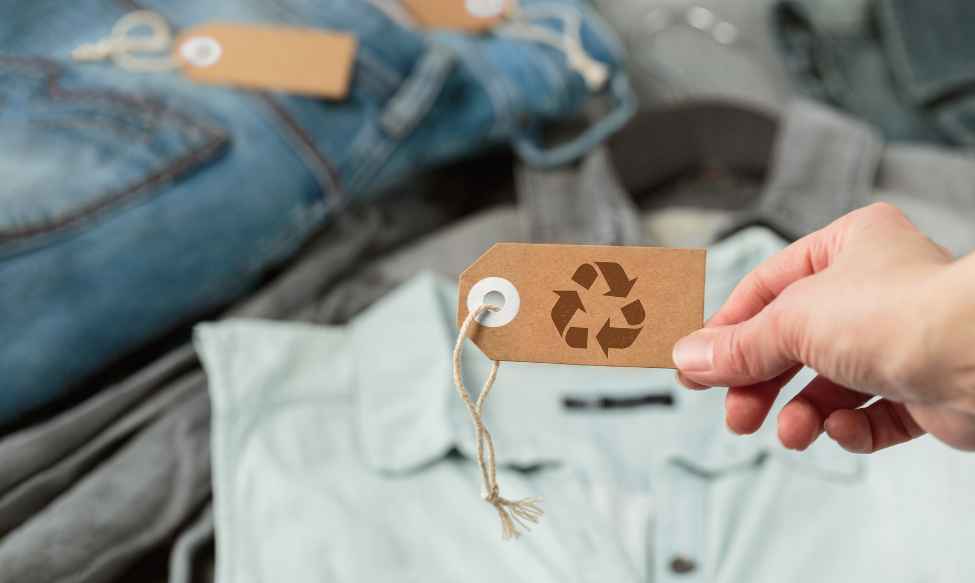
A recycling icon on the front of a pack suggests the whole thing is recyclable. If only the outer sleeve is, say so right beside the icon.
Risky design choices and what to do instead
What you might have now | Why it’s a problem | A safer option |
A self-made “Eco Approved” seal | It’s an uncertified sustainability label | Remove it, or use a real mark you’re licensed for, like the EU Ecolabel or FSC |
“Eco-friendly packaging” beside a leaf | A generic claim with no proof | Be specific: “Box made from 80% recycled cardboard” (use your real figure) |
A “carbon neutral” badge | Offset-based neutrality claims are banned | Describe actual cuts in your own operations, with numbers and dates |
A recycling icon on the front of a pack | Suggests the whole pack is recyclable | Spell it out beside the icon: “Sleeve recyclable. Tray not yet.” |
Green palette, forest photos and “naturally better” | The overall impression implies a benefit | Keep the palette, drop the vague line or swap in a fact you can prove |
“No plastic cutlery” as a selling point | It’s been an EU legal requirement since 2021 | Leave it out of your promotional claims |

A five-step audit for your brand and packaging
You don’t need a consultant to start. An afternoon with your team and a printout of everything will tell you a lot.
- Gather everything a customer sees. Packaging, labels, website, social templates, brochures, exhibition stands, email signatures. Include old print stock that’s still going out the door.
- Mark every green signal, not just the words. Badges, leaves, globes, green ticks, nature photos, product names. For each one, ask whether a shopper would read it as a promise about the environment.
- Check each badge against a real scheme. If you can’t name the independent body that certifies it, treat it as self-made.
- Match every claim to evidence. That means a figure, a certificate or a test report you can produce on request. Nothing on file? Rewrite it or take it off.
- Fix the fastest things first. Website and social graphics can change this week. Packaging and print take longer, so talk to your printer now and get advice on stock that’s already printed. Keep a record of what you changed and why.
Frequently asked questions
Is the word “sustainable” banned in Ireland now?
No. The problem is using it as a broad claim with nothing specific behind it. “Timber from FSC-certified forests” tells a customer exactly what you mean and can be checked. “A sustainable choice” on its own can’t.
Do the new green claims rules apply to B2B companies?
They’re aimed at marketing to consumers, so a business that only sells to other businesses has less direct exposure. Anything the public can see, like your website or retail packaging, could still be caught.
Can we keep a genuine certification logo?
Yes, if it comes from a certification scheme with independent third-party checks, or from a public authority, and you’re entitled to use it. Follow the scheme’s rules on how it’s displayed, and don’t let it suggest more than it covers.
Who enforces the rules, and what are the penalties?
The Competition and Consumer Protection Commission (CCPC). It can issue compliance notices and fixed payment notices, and take businesses to court. Widespread breaches can lead to fines of up to 4% of turnover or €2 million (Matheson).
Can we still talk about our climate efforts?
Yes. Talk about what you’ve actually done in your own business, with figures and dates. Future targets need a detailed, measurable plan with independent monitoring. What you can’t do is call a product carbon neutral because you’ve bought offsets.
The Smart Group view
We think this is good news for honest brands. For years, a leaf and a shade of green did a lot of work for products that hadn’t earned it. Now the brands with real proof have something worth saying, and everyone else has a reason to get specific.
Most fixes are small. A badge comes off, a vague line gets replaced with a fact, an icon gets a short note beside it. Your brand still looks like your brand.
Want a second pair of eyes? Book a free Brand Performance Audit and we’ll check your packaging, website and print for green claims as part of it.
This article is general information, not legal advice. For decisions about specific claims, speak to a solicitor.
Sources